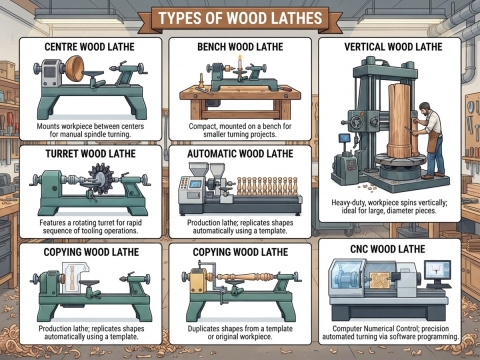
Το μηχάνημα αυτοματοποιεί την κοπή, όχι την κρίση γύρω από αυτήν. Αυτή η αναλυτική παρουσίαση καλύπτει την κρίση: την επιλογή και την προετοιμασία υλικού που μπορεί να εμπιστευτεί το μηχάνημα, τη ρύθμιση της στήριξης έτσι ώστε η λεπτή εργασία να κυλάει αθόρυβα, τον προγραμματισμό από ένα σχεδιασμένο περίγραμμα, την ανάγνωση της πρώτης κοπής και τη διάγνωση της λίγης συμπτωματολογίας που ευθύνεται σχεδόν για κάθε κατεστραμμένο εξάρτημα που παράγει ένας τόρνος ξύλου.

Πριν από το μηχάνημα: Επιλογή και προετοιμασία του κενού
Κάθε ολοκληρωμένο προφίλ κληρονομεί το άμορφο κομμάτι από το οποίο ξεκίνησε, επομένως η προετοιμασία είναι η πιο απαιτητική - δέκα λεπτά σε όλη τη διαδικασία. Επιλέξτε υλικό με ίσιες ίνες χωρίς χαλαρούς κόμπους κατά μήκος του μήκους της κοπής, καθώς ένας κόμπος σε λεπτό τμήμα μπορεί να εκτοξευθεί με ταχύτητα. Το στεγνό, σταθερό ξύλο διατηρεί τις διαστάσεις του μετά την κοπή. Το υλικό που εξακολουθεί να κινείται με υγρασία γυρίζει στρογγυλό σήμερα και οβάλ την επόμενη εβδομάδα.
Κόψτε τα τεμάχια τετράγωνα και ομοιόμορφα, λίγο μακρύτερα από το τελειωμένο κομμάτι για τα στελέχη σύσφιξης σε κάθε άκρο. Σημειώστε και προ-τρυπήστε τα κέντρα όταν το στυλ τσοκ σας επωφελείται από αυτό, επειδή ένα τεμάχιο που φορτώνεται εκτός κέντρου αναγκάζει το πέρασμα χοντροκομίας να αφαιρέσει το υλικό ανομοιόμορφα και αφήνει το μηχάνημα να καταπολεμά τους κραδασμούς από το πρώτο δευτερόλεπτο. Τα σκληρά ξύλα που κυριαρχούν εφαρμογές κατεργασίας ξύλου στην παραγωγή, οξιά, σφένδαμος, σημύδα και δρυς, όλα ανταμείβουν αυτό το είδος με καθαρές κοπές κουράς.
Ρύθμιση: Σύσφιξη, Κέντρα και Σταθερή Στάση
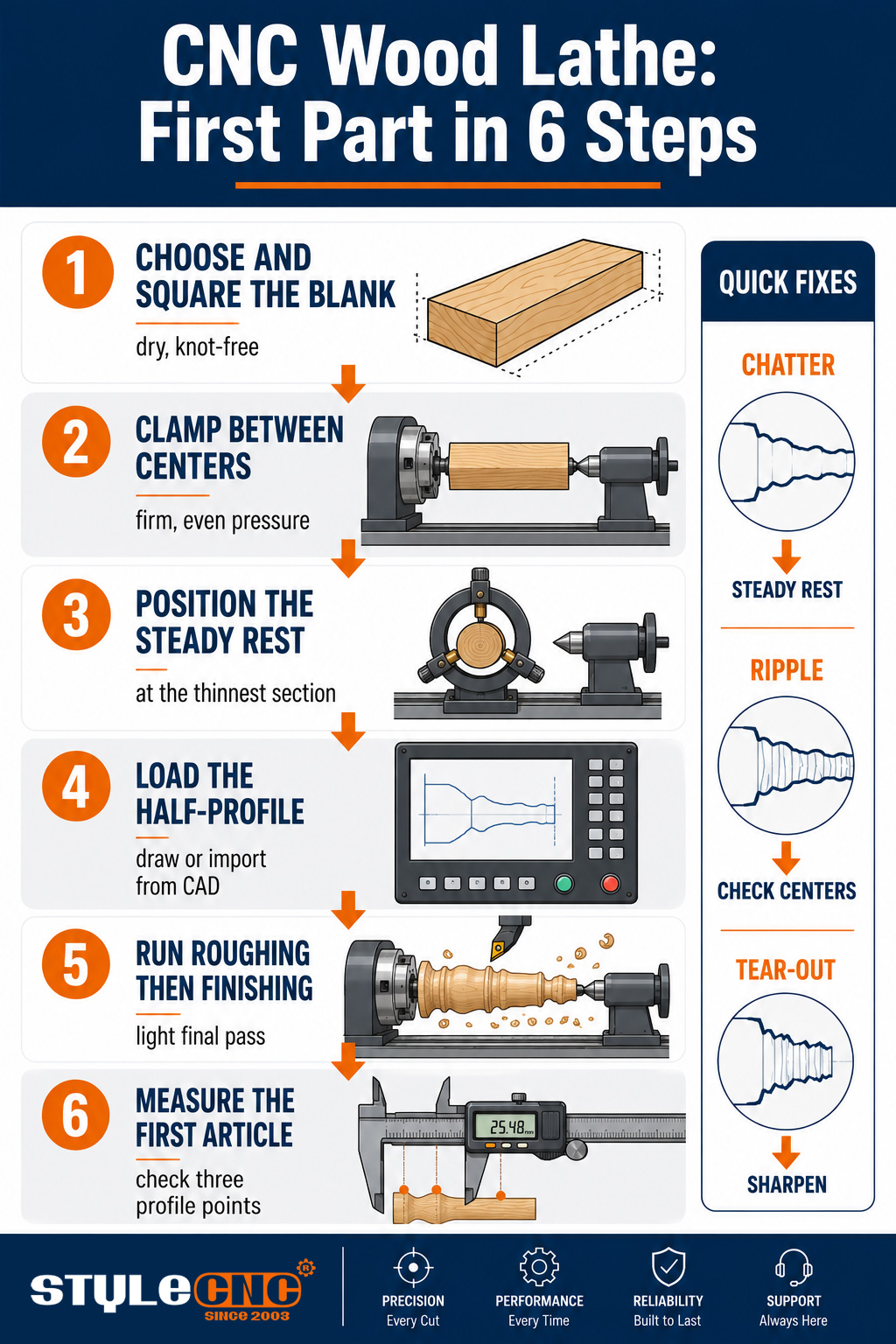
Τοποθετήστε το τεμάχιο ανάμεσα στο τσοκ κίνησης στην κεφαλή του κοντράμαντου και το κέντρο κίνησης στο κοντράμαντο και στερεώστε και τα δύο με σταθερή, ομοιόμορφη πίεση. Πολύ χαλαρό, το τεμάχιο γλιστράει κάτω από το φορτίο τραχύτητας. Υπερβολικά σφιγμένα και μακριά τόξα από κοντά, τα οποία το πέρασμα προφίλ αναπαράγει πιστά ως καμπύλη που δεν σχεδιάσατε εσείς.
Η σταθερή ανάπαυση είναι η διαφορά μεταξύ ενός μηχανήματος που μπορεί να κάνει λεπτή εργασία και ενός που την αναφέρει μόνο στο φυλλάδιο. Τοποθετήστε τα δάχτυλα ανάπαυσης στο λεπτότερο προγραμματισμένο τμήμα πριν ξεκινήσει ο κύκλος, επειδή μια λαβή κάγκελου ή μπαστούνιου που έχει μήκος λιγότερο από λίγα εκατοστά θα λυγίσει μακριά από τη λεπίδα χωρίς στήριξη και το αποτέλεσμα είναι κυματισμός που δεν μπορεί να θεραπεύσει καμία αλλαγή παραμέτρου. Οι χειριστές θέτουν το ίδιο ερώτημα με δώδεκα διατυπώσεις: γιατί η μέση του άξονα μου είναι τραχιά όταν και τα δύο άκρα είναι καθαρά; Η απάντηση είναι η παραμόρφωση και τα υπόλοιπα είναι η λύση.
Κλείστε τα προστατευτικά πριν από κάθε περιστροφή και μείνετε μακριά από το επίπεδο περιστροφής στην πρώτη περιστροφή ενός νέου τεμαχίου, καθώς αυτή είναι η στιγμή που ένα αόρατο κάρτερ ή ένας χαλαρός κόμπος φεύγει. Η συνήθεια κοστίζει 2 δευτερόλεπτα. Η εναλλακτική λύση διδάσκει το μάθημα με την ταχύτητα του άξονα. Η εξαγωγή σκόνης που εκτελείται από την 1η κοπή είναι μέρος της ίδιας πειθαρχίας, διατηρώντας τα ρινίσματα μακριά από τις ράγες και τη λεπτή σκόνη μακριά από τον αέρα που αναπνέει ο χειριστής σε όλη τη βάρδια.
Προγραμματισμός του προφίλ
Το πρόγραμμα ξεκινά ως ημι-προφίλ: ένα δισδιάστατο περίγραμμα της μίας πλευράς του τελικού εξαρτήματος από άκρη σε άκρη. Σχεδιάστε το στο λογισμικό του ελεγκτή ή εισαγάγετέ το από CAD, ορίστε τη διάμετρο και το μήκος του τεμαχίου και το λογισμικό δημιουργεί το ίδιο τα περάσματα χοντροκομμένης κατεργασίας και φινιρίσματος. Δεν υπάρχει πρότυπο για κοπή ούτε κώδικας G για χειρόγραφη σύνταξη σε ένα σύγχρονο μηχάνημα.
2 ρυθμίσεις προγράμματος αξίζουν προσοχής σε κάθε νέο εξάρτημα. Ρυθμίστε το βάθος χοντρής κοπής έτσι ώστε το τετράγωνο κενό να στρογγυλοποιείται με άνετα δαγκώματα αντί για ένα ηρωικό πέρασμα, και ρυθμίστε την τροφοδοσία φινιρίσματος πιο αργά από όσο κρίνεται απαραίτητο για το 1ο άρθρο. Η πλήρης ροή εργασίας από σχέδιο σε εξάρτημα, με στιγμιότυπα οθόνης λογισμικού και επεξεργασμένα παραδείγματα, καλύπτεται βήμα προς βήμα στο πώς να χρησιμοποιήσετε έναν οδηγό βασικών αρχών για τον τόρνο ξύλου, το οποίο ταιριάζει καλά με αυτήν τη σελίδα για τους χειριστές της πρώτης εβδομάδας.
Η 1η Κοπή: Παράμετροι και Ανάγνωση του Αποτελέσματος
Ξεκινήστε συντηρητικά και αφήστε την περικοπή να σας πει πού είναι το περιθώριο:
• Ταχύτητα άξονα: ξεκινήστε από τις χαμηλές χιλιάδες στροφές/λεπτό για συνηθισμένες διαμέτρους ποδιών, χαμηλώστε για μεγάλες διαμέτρους και αυξήστε μόνο όσο η κοπή παραμένει ομαλή.
• Τραχύ: μέτρια τροφοδοσία, ρηχά τσιμπήματα· ο στόχος είναι στρογγυλό κοντάκι, όχι τελειωμένη επιφάνεια.
• Τελειώνοντας: ένα ελαφρύ συνεχές πέρασμα με μειωμένη τροφοδοσία παράγει την επιφάνεια· 2 διστακτικά περάσματα παράγουν γραμμές μαρτυρίας.
• Άκου και ΚοίταΜια καθαρή κοπή με ψαλίδι ακούγεται ομοιόμορφη και πετάει κορδέλες. Οι ήχοι σφυριού και η σκόνη σημαίνουν ότι η άκρη ή η τροφοδοσία είναι λάθος.
Εκτελέστε το 1ο άρθρο, σταματήστε και μετρήστε το σε σχέση με το σχέδιο σε 3 σημεία κατά μήκος του προφίλ πριν από την ολοκλήρωση της παρτίδας. Το μηχάνημα θα επαναλάβει ευχαρίστως ένα σφάλμα σαράντα φορές με τέλεια συνέπεια, επομένως το 1ο μέρος φέρει όλη την αξία επιθεώρησης. Ολοκληρωμένα παραδείγματα σε πόδια, κάγκελα και ρολά στο Συλλογή έργων τόρνου ξύλου CNC Δείξτε πώς πρέπει να μοιάζει επιφανειακά ένα έτοιμο προς χρήση αντικείμενο πριν το τρίψιμο.
Αντιμετώπιση προβλημάτων: Σύμπτωμα προς αιτία προς διόρθωση
Σχεδόν κάθε κατεστραμμένο μέρος ενός ξυλότορνου αφήνει ίχνη σε ένα από τα 5 συμπτώματα:
| Σύμπτωμα | Πιθανή Αιτία | σταθερός | Μετρήσεις |
|---|---|---|---|
| Σημάδια τριξίματος σε λεπτά τμήματα | Μη υποστηριζόμενο κοντάκι που λυγίζει μακριά από τη λεπίδα | Προσθέστε ή επανατοποθετήστε τη σταθερή βάση στη λεπτή ζώνη· μειώστε το βάθος κοπής | Ορατή εκτροπή στο σημείο ηρεμίας κατά τη διάρκεια της πάσας |
| Κυματισμός κατά μήκος ολόκληρου του προφίλ | Φθαρμένα κέντρα, χαλαρά άκρα ή λεπίδα πέρα από την άκρη της | Επανατοποθετήστε τα κέντρα, σφίξτε τα γάντζους, περιστρέψτε ή αντικαταστήστε τη λεπίδα | Επανάληψη βήματος κυματισμού με περιστροφή ατράκτου |
| Σκίσιμο σε σχήμα κόκκου | Η τροφοδοσία είναι πολύ επιθετική για το ξύλο, με θαμπή άκρη | Χαλαρώστε την τελική πρόωση, κάντε ένα ελαφρύτερο τελικό πέρασμα, ακονίστε | Η επιφάνεια διαβάζεται απαλά κάτω από την άκρη του δακτύλου μετά το πέρασμα |
| Σημάδια καψίματος σε κοιλάδες προφίλ | Η λεπίδα κολλάει, η ταχύτητα είναι πολύ υψηλή για τη διάμετρο | Αύξηση της τροφοδοσίας μέσω της κοιλάδας, μείωση της ταχύτητας της ατράκτου | Καψάλισμα που εμφανίζεται στα ίδια σημεία προφίλ σε κάθε μέρος |
| Τα εξαρτήματα ποικίλλουν ανάλογα με την παρτίδα | Ασυνεπή τεμάχια, μετατόπιση πίεσης σύσφιξης | Τυποποιήστε την προετοιμασία του τυφλού, ελέγξτε τη δύναμη του τσοκ και του κοντράμαντου | Διάμετρος κατανεμημένος σε δέκα διαδοχικά μέρη |
Εργαστείτε τον πίνακα από πάνω προς τα κάτω όταν εμφανιστεί ένα σύμπτωμα και αλλάξτε μία μεταβλητή κάθε φορά, ώστε η διόρθωση να αναγνωρίζεται από μόνη της. Βαθύτερα διαγνωστικά δέντρα, συμπεριλαμβανομένων ηλεκτρικών και ελεγκτικών σφαλμάτων πέρα από τα προβλήματα κοπής, βρίσκονται στο... Οδηγός αντιμετώπισης προβλημάτων τόρνου ξύλου, η οποία είναι η σελίδα που θα προστεθεί στους σελιδοδείκτες δίπλα στο μηχάνημα.
Ο Ρυθμός Συντήρησης που το Διατηρεί σε Λειτουργία
• Κάθε βάρδια: αφαιρέστε τα ξέσματα από τις ράγες και τις βίδες και ελέγξτε τις άκρες των λεπίδων πριν από τον 1ο κύκλο.
• Εβδομαδιαίος: λιπάνετε τους οδηγούς και τις σφαιρικές βίδες σύμφωνα με το πρόγραμμα του εγχειριδίου και επαληθεύστε την ευθυγράμμιση του κοντράμαντου.
• Μηνιαία Χρέωση : ελέγξτε την τάση του ιμάντα, ελέγξτε τη ρύθμιση του gib και επιβεβαιώστε ότι τα κέντρα λειτουργούν σωστά.
• Όπως έχει φορεθεί: περιστρέψτε ή ακονίστε τις λεπίδες προφίλ με το πρώτο σημάδι φθοράς και όχι αφού καταστραφεί το υλικό.
Λίστα ελέγχου πριν από την πτήση πριν από κάθε παρτίδα
✓ Άδειο κοντάκι ίσιο, στεγνό, χωρίς κόμπους και κομμένο σε ομοιόμορφο μήκος.
✓ Το τσοκ και το κοντράμαντο εφαρμόζουν σταθερά και ομοιόμορφα, με σταθερή στήριξη στο λεπτότερο τμήμα.
✓ Φόρτωση προφίλ, καθορισμός διαστάσεων κενού ακατέργαστου υλικού, έλεγχος βάθους χοντροκομμένης κατεργασίας και τροφοδοσίας φινιρίσματος.
✓ Επιθεωρήθηκαν οι λεπίδες, οι προφυλακτήρες ήταν κλειστοί, η εξαγωγή ήταν σε λειτουργία.
✓ Το 1ο αντικείμενο μετρήθηκε σε 3 σημεία προφίλ πριν από την εκτέλεση της παρτίδας.
Συχνές ερωτήσεις
Με ποια ταχύτητα ατράκτου πρέπει να ξεκινήσω;
Ξεκινήστε χαμηλά για τη διάμετρο, στις χαμηλές χιλιάδες στροφές για τυπικό κοντάκι και πιο αργά για μεγάλες διαμέτρους, και στη συνέχεια αυξήστε την ταχύτητα ενώ η κοπή παραμένει ομαλή και αθόρυβη. Η σωστή ταχύτητα ανακοινώνεται από μόνη της. Η λάθος ταχύτητα κουδουνίζει ή καίγεται πρώτη.
Γιατί το εξάρτημά μου κουδουνίζει μόνο στο λεπτό μεσαίο τμήμα;
Το λεπτό κοντάκι κάμπτεται μακριά από τη λάμα ακριβώς στο σημείο που είναι λεπτότερο και η αναπήδηση εκτυπώνεται ως κρότος. Τοποθετήστε τη βάση στήριξης σε αυτό το τμήμα και ελαφρύνετε την τελική κοπή. Καμία αλλαγή ταχύτητας ή τροφοδοσίας δεν υποκαθιστά την υποστήριξη.
Χρειάζεται να στρογγυλοποιήσω τα τεμάχια πριν από τη φόρτωση ή μπορεί το μηχάνημα να δέχεται τετράγωνο υλικό;
Οι μηχανές παραγωγής παραλαμβάνουν απευθείας τετράγωνο υλικό. Το πέρασμα χοντροκομμένου υλικού το στρογγυλοποιεί σε δευτερόλεπτα. Αυτό που έχει σημασία είναι ότι το τετράγωνο τεμάχιο είναι ευθύ και κεντραρισμένο, καθώς ένα έκκεντρο τεμάχιο χτυπάει τη λάμα σε κάθε περιστροφή μέχρι να στρογγυλευτεί.
Πώς μπορώ να σταματήσω το σκίσιμο σε ξύλο με σχήμα ή μπούκλες;
Ακονίστε πρώτα, στη συνέχεια επιβραδύνετε την τελική πρόωση και κάντε ένα ελαφρύτερο τελικό πέρασμα. Οι κόκκοι με σχήμα αλλάζουν κατεύθυνση συνεχώς και μόνο μια κοφτερή άκρη με απαλή πρόωση τους κόβει καθαρά. Κάποια κοντάκια με πολύ σχήμα χρειάζονται απλώς ένα προγραμματισμένο περιθώριο λείανσης.
Πόσο συχνά χρειάζονται ακόνισμα ή αντικατάσταση οι λεπίδες προφίλ;
Κατά συνθήκη, όχι ημερολογιακά: η πρώτη αποσπώμενη ή θολή επιφάνεια σε απόθεμα που προηγουμένως κόπηκε καθαρά είναι το σήμα. Τα καταστήματα που διαθέτουν πυκνό σκληρό ξύλο καθημερινά διορθώνουν τις άκρες σε εβδομαδιαίο ρυθμό και διατηρούν ένα ακονισμένο σετ εφεδρικών εξαρτημάτων για εναλλαγή χωρίς να διακόπτεται η παραγωγή.
Τα ολοκληρωμένα προφίλ μου εμφανίζουν μια λεπτή σπειροειδή κυματοειδή εικόνα. Τι την προκαλεί;
Ένα κανονικό σπειροειδές μοτίβο ακολουθεί την πορεία του με περιστροφή και δείχνει στους μηχανισμούς: φθαρμένα ή χαλαρά κέντρα, διάκενο στο άκρο του άξονα ή λεπίδα πέρα από την άκρη της. Επανατοποθετήστε τα κέντρα, σφίξτε τα άξονα και αλλάξτε τη λεπίδα πριν αγγίξετε το πρόγραμμα.
Μπορώ να πρασινίσω ή να ξεραθώ μερικώς από ξύλο;
Το μηχάνημα θα το κόψει, αλλά το εξάρτημα δεν θα διατηρήσει το σχήμα που κόβετε. Το πράσινο υλικό κινείται καθώς στεγνώνει, επομένως η τόρνευση παραγωγής χρειάζεται στεγνά, σταθερά τεμάχια. Η πράσινη τόρνευση ανήκει σε μπολ χειροτεχνίας με σκόπιμο περιθώριο στεγνώματος, όχι σε εργασία με άτρακτο σε παρτίδες.
Ποια τακτική συντήρηση έχει πραγματικά μεγαλύτερη σημασία;
Ξεφλουδίζει από τις ράγες και βιδώνει σε κάθε βάρδια, λίπανση σύμφωνα με το πρόγραμμα και καλή κατάσταση της λάμας. Αυτές οι 3 συνήθειες αποτρέπουν την αλυσίδα φθοράς που καταλήγει σε κυματισμούς, κροτάλισμα και απώλεια ακρίβειας. Όλα τα άλλα στο εγχειρίδιο έχουν σημασία, αλλά αυτά τα 3 αποδίδουν καθημερινά.
Εκτελέστε αυτά τα βήματα στο σωστό μηχάνημα
Κάθε παραπάνω τεχνική προϋποθέτει ένα μηχάνημα με σταθερή υποστήριξη, πραγματικά κέντρα και έναν ελεγκτή που εκφωνεί προφίλ. Συγκρίνετε διαμορφώσεις σε όλο το εύρος Τόρνοι ξύλου CNC για τόρνευση και σκάλισμα και λάβετε μια δωρεάν προσφορά με εκπαίδευση.